
An important neolithic site has been discovered by archaeologists surveying the site for a new school. Continue reading “Largest ever Neolithic discovery on Anglesey”
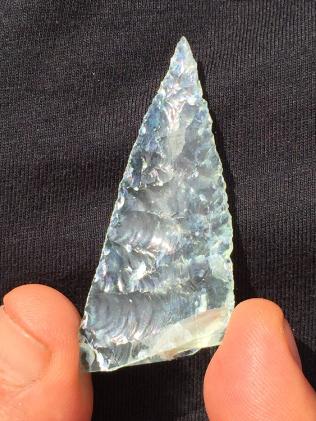
Staff and students from The University of Western Australia’s School of Indigenous Studies have made a surprise discovery on an excursion to Rottnest Island (Wadjemup), uncovering a rare nineteenth century glass spearhead.
It’s the third time in the past year that UWA staff and students have uncovered spearheads on the island.
Earlier this year a Heritage Studies student found a glass spearhead, and last year a staff member unearthed a ceramic one.
The spearheads are believed to have been used by Indigenous men and boys who were imprisoned on island between 1838 and 1931.
Records show photographs of Sunday hunting day when the Indigenous prisoners would hunt to supplement their diet of barley, cabbage and porridge with fish, snake and quokka.
It is believed the prisoners would find a place on top of a hill often overlooking the mainland where they would make spear tips from scrap pieces of glass.
Professor Len Collard from UWA’s School of Indigenous Studies said the most recent discovery occurred when the 45 students and eight staff from the UWA School of Indigenous Studies were learning about the history of Indigenous prisoners on the island.
“As I was digging around in the sand with my foot, something shiny glinted in the light and I recognised the object to be a glass spearhead,” Professor Collard said.


Last September the Viking age fortress was discovered in Denmark for the first time in 60 years, Continue reading “Viking fortress about to be excavated near Copenhagen”

Archaeologists from Moesgaard Museum have been examining several bogs containing sacrificial offerings found in the area near Skødstrup just north of Aarhus in Denmark. Continue reading “More late iron-age sacrificial finds Denmark”
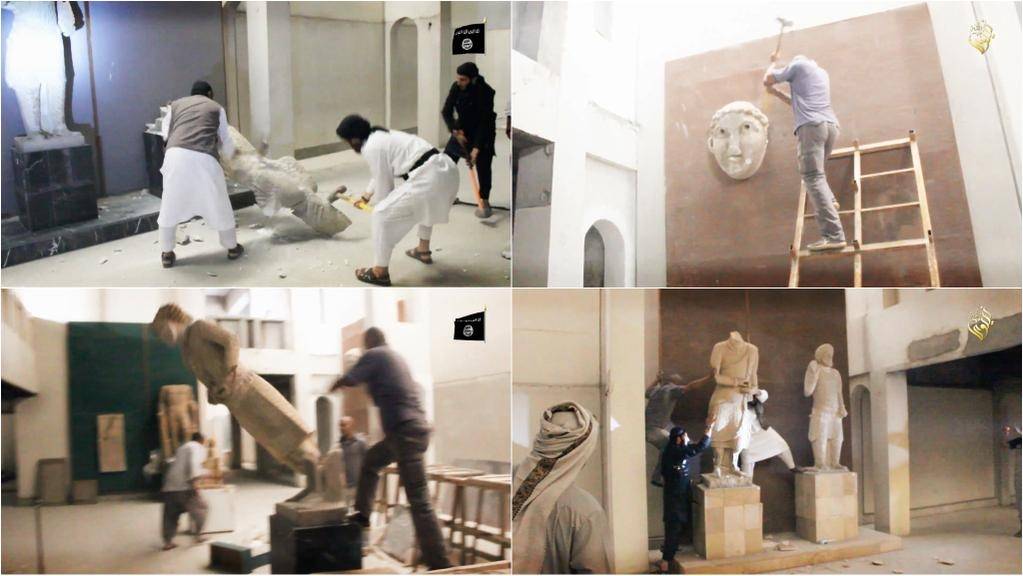
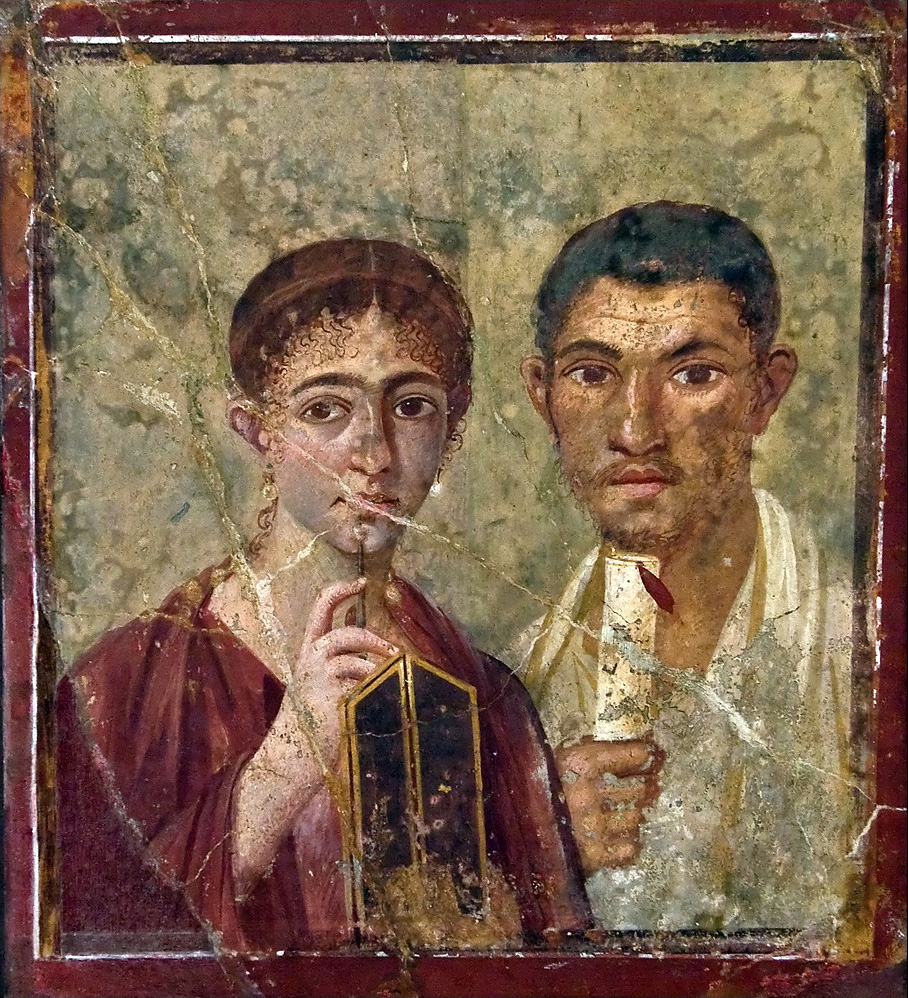
According to Pompeii’s archaeological superintendent Massimo Osanna the site has received around 100 packages returning stolen relics in recent years. Continue reading “Are relics from Pompeii cursed?”

Israel’s government Antiquities Authority recently said that an ancient structure that it is excavating on the side of the highway appears to match ancient descriptions of the tomb of the Jewish rebels the Maccabees. Continue reading “Archaeologists in Israel may have found Maccabee tomb”

A cave discovered in 2007, in the Zagros mountain range in Armenia has been determined to contain the oldest known, almost complete, winemaking facility. Continue reading “Oldest winemaking facility to date has been discovered”

Archaeologists have finalised the excavation of wreckage belonging to the Spitfire that crashed 75 years ago. Continue reading “Spitfire excavated 75 years after fatal crash”

Although filmed as part of a presentation to tourists this is a really interesting video, showing the steps involved in the manufacture of papyrus:
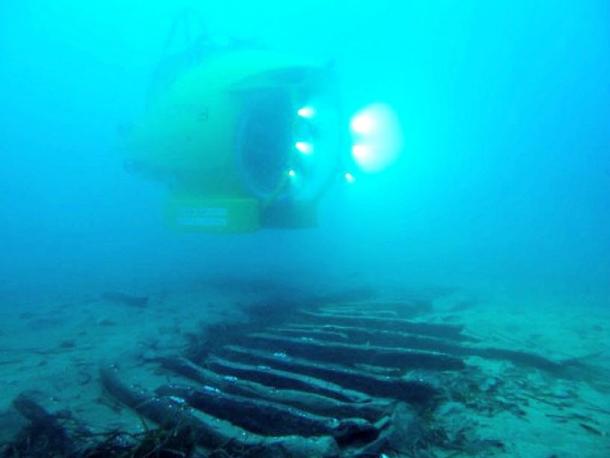
Underwater research being conducted of Cape Creus, Catalonia strongly suggests that the pre-Roman Iberians were seafarers. This is the second boat dated to roughly this period found of the Spanish coast. Continue reading “Iberian Shipwreck discovered”
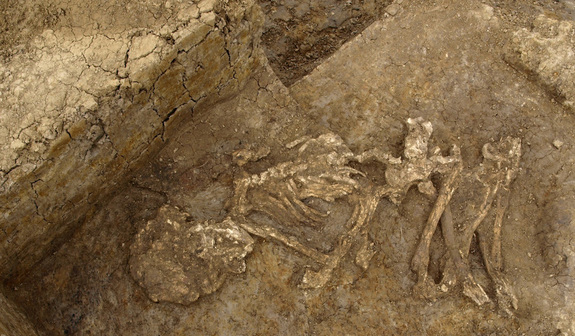
Archaeologists at the University of Sheffield working with colleagues from the University of Manchester and University College London have discovered that some ancient Briton burials are consistent with a prehistoric mummy from northern Yemen. Continue reading “Mummification more common and widespread than previously believed.”
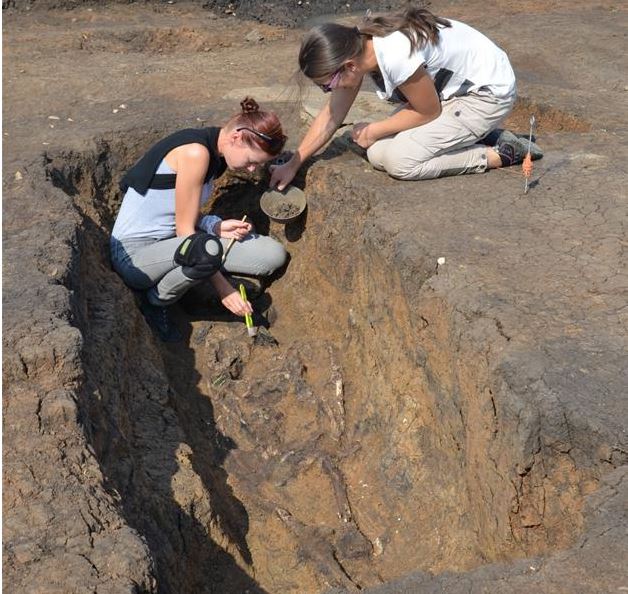
The grave was discovered in 2010 by metal detectorists conducting an illegal search in the Czech Republic. Archaeologists from Poland’s Rzeszów University have excavated a 2,000 year old stone-lined grave revealing a young man believed to be a part of the Macromannic aristocracy.
He was buried in a wooden coffin constructed from a hollowed out tree trunk and wearing a leather belt with a buckle he was also buried with a clay and a bronze vessel. However, the empty space at the foot of the grave suggests that the Grave may have been robbed and is missing high value objects. As result of Geophysical surveys archaeologists are hopeful of finding additional Marcomannic tombs in the region.
Featured image: Agnieszka Půlpánová-Reszczyńska

 History Bytez