
Archaeologists have discovered what appears to be a Viking navigational sundial. Continue reading “Viking ‘sunstones’ put to the test”

ARCHAEOLOGISTS have uncovered a boat intended to carry the soul of its owner to the stars buried under the ruins of a 4500-year-old Egyptian tomb. Continue reading “Egyptian Solar boat discovered”
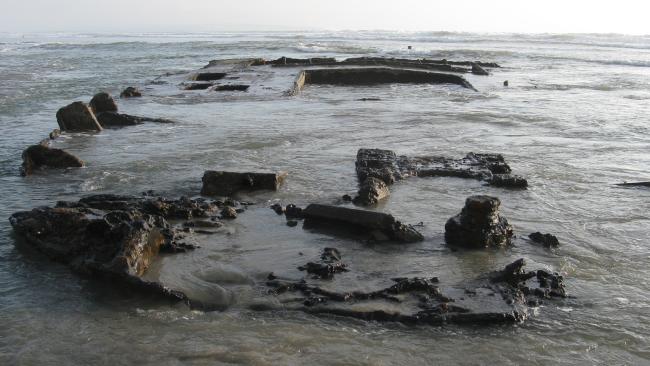
The SS Monte Carlo was sunk nearly 80 years ago with the ruins lying on a beach near Coronado Shores, California. Continue reading “SS Monte Carlo ‘Sin Ship’ resurfaces”
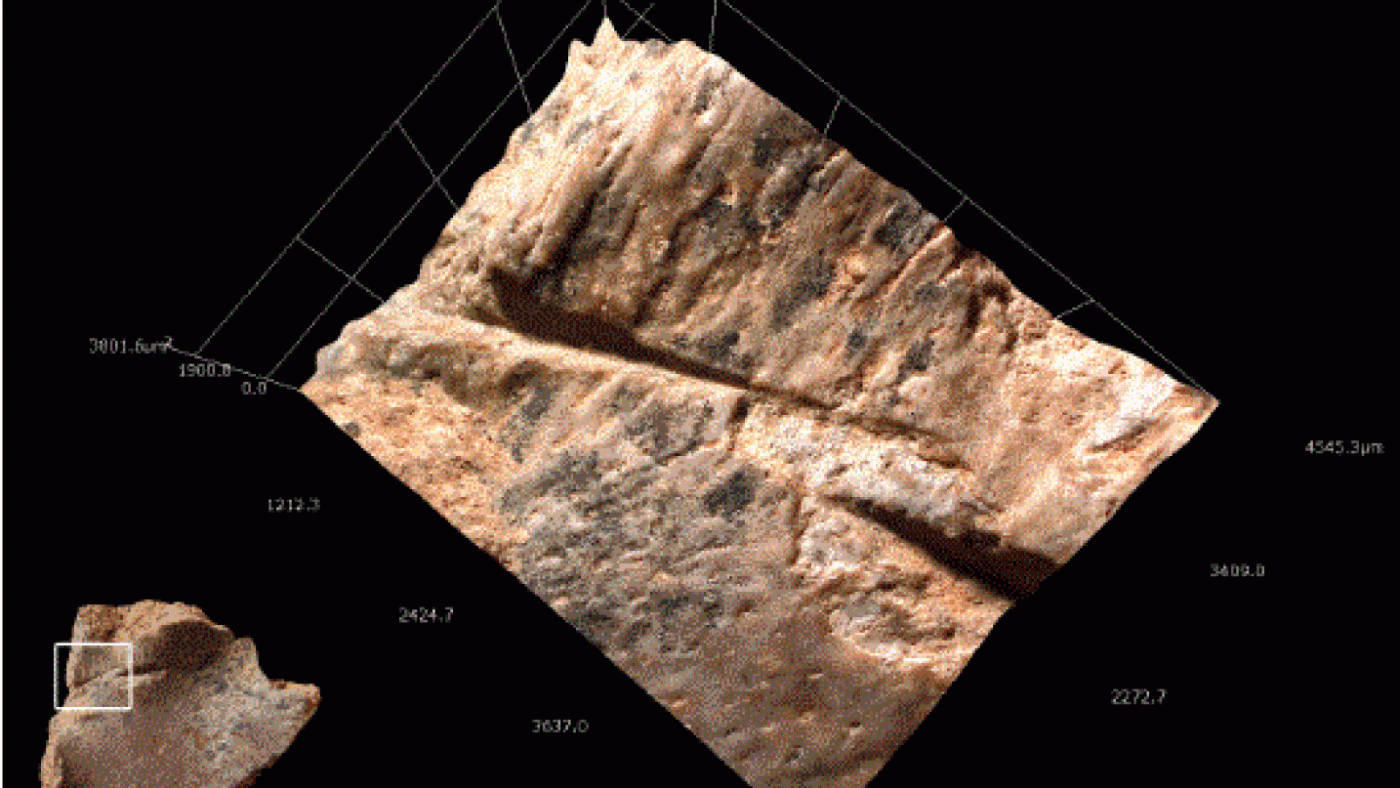
Marks on tortoise shells discovered in Qesem cave suggest pre-historic people in Israel ate tortoises. The marks indicate that the shell of the animals were cracked open using stone hammers. Furthermore, burning on the shells indicates the animals were cooked in their shells.
Continue reading “Prehistoric Israelis roasted tortoises 400,000 years ago”
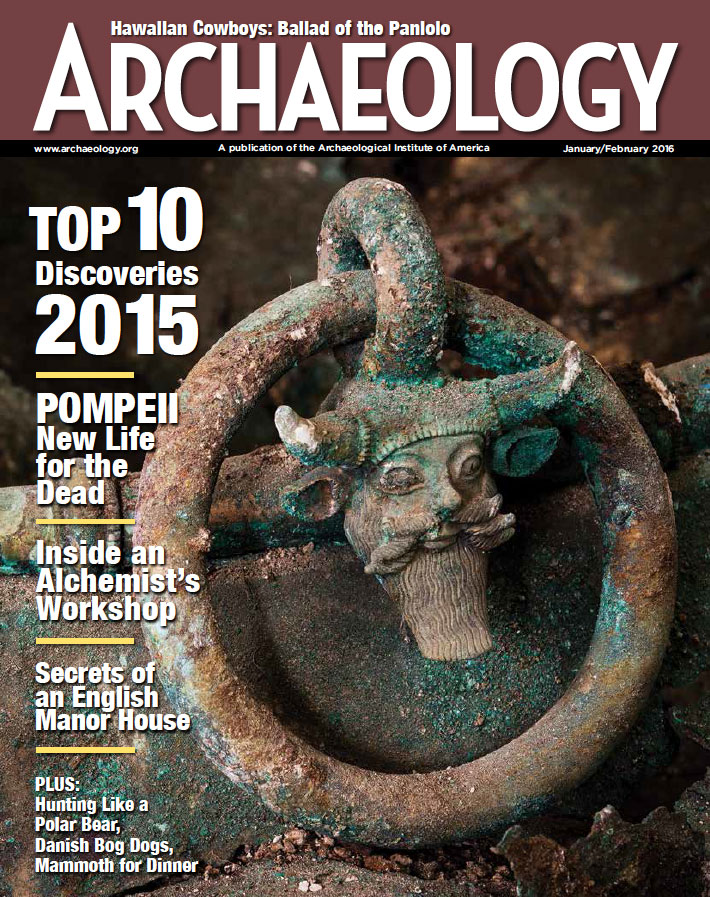
Historian of science Mathieu Ossendrijver of Humboldt University, using the texts from three published and two unpublished cuneiform tablets from the British Museum, realized that the Babylonians calculated the position of the planet Jupiter with geometrical methods between 350 and 50 B.C. Continue reading “Babylonian Astronomers Described Jupiter’s Motion”
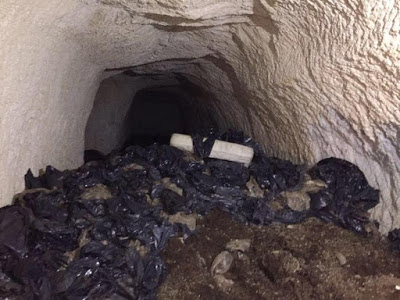
The illegal dumping of rubbish in Roman catacombs along the Appian Way has been discovered by Italian police. Continue reading “Illegal dumpsite found in Roman catacombs”
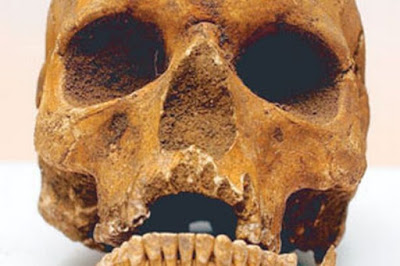
Archaeologists have discovered a mass grave containing 300 skeletons under ground being assessed for an affordable housing development. Continue reading “Medieval mass burial found under UK car park”

The 1,500-year-old history of Hagia Sophia, an iconic world cultural heritage site and the most spectacular Orthodox cathedral in eastern Christendom for a millennium, is explored in a new 45-minute screening on show at the Hellenic Cosmos Culture Centre’s dome-shaped Virtual Reality Theatre, or ‘Tholos’, in Athens.
Source: The Archaeology News Network: History of Hagia Sophia at Hellenic Cosmos VR ‘Tholos’ Theatre, Athens

Two small sized sculptures (approx 0.54cm height), one of Artemis made of copper and a second of her brother Apollo made of marble Have been found on Crete.
Continue reading “Statues depicting Artemis and Apollo found in Crete”
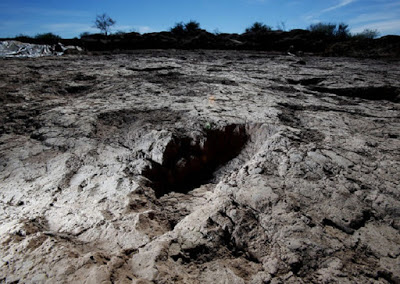
A worker excavating the planned site of a bridge and new interstate connection on the northwest side has unearthed a series of footprints, an archaeological find that is believed to date back more than 2,500 years. Continue reading “Ancient footprints found at Tucson road construction site”

Eight museum employees are now facing charges over the botched restoration of the burial mask of Tutankhamun in Egypt.
This was announced on Saturday by Egyptian prosecutors who claimed that professional methods were violated by the staff members. Continue reading “Staff charged over damage to Tutankhamen’s Mask”
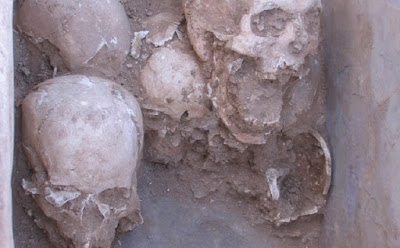
As gruesome as it may sound a recent discovery indicates that the dead in an ancient Southern Jordanian town were not buried until after they had decomposed. Continue reading “9,000-year-old burials with sorted bones found in Jordan”


These skirmishes led to more expansive military campaigns, settlement, and ultimately conquest of large swathes of the British Isles. But Dr Steve Ashby, of the Department of Archaeology at the University of York, wanted to explore the social justifications for this spike in aggressive activity.
View original post 246 more words

 History Bytez